BMW X5 Air Suspension Explained: How the System Works and What Actually Fails
BMW air suspension is not a mysterious cloud of air. It is a compressor, a valve block, springs and sensors. This guide is the system map we use at Hainault.
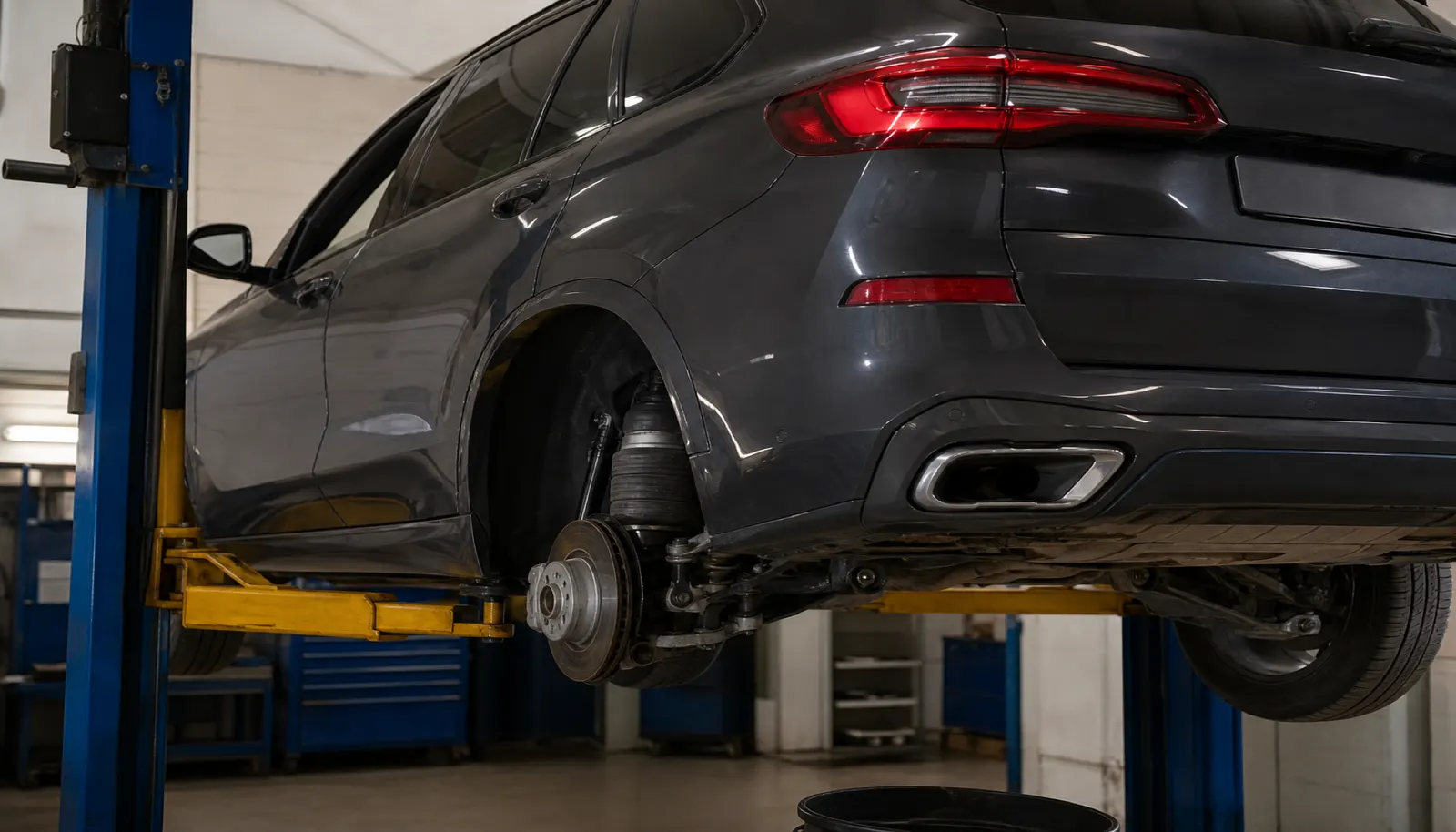
The parts, in order
A compressor draws in air, dries it, and feeds a reservoir or the springs via a valve block. Ride-height sensors tell the module where each corner sits. The module commands fill or exhaust. On X5 E70/F15/G05 and X7/7 Series, that loop runs every time you unlock the car. A leak anywhere makes the compressor work overtime.
Failure order we actually see
1) Rear air spring leak. 2) Compressor overheats trying to keep up. 3) Dryer saturates and water reaches the block. 4) Valve block sticks. People often buy a compressor first because it is the noisy part. ISTA duty-cycle and a leak test would have pointed at the spring. That is the job sequence at Forest Road.
Warnings and driving it here
“Ride too low”, a car silhouette, disabled adaptive drive, and a compressor that chatters after parking. You can usually drive an X5 to the workshop at moderate speed if one rear is low; if both rears are on the bump stops, recover it. Driving on the rims of the springs kills tyres and the compressor.
Coilovers versus repair
Conversions exist and some owners want them. Most X5 drivers prefer the factory ride for the A12. We repair OEM-style springs with a warranty. If you want a conversion we will talk about geometry, load ratings and MOT — not a cheap kit that sits the car on its arches.
Diagnosis fee and quote
£85 ISTA diagnostic, credited to the repair. You get a corner-by-corner cause, not “needs a full air kit”. Alignment after springs is part of doing it properly.